Pass the Salt and the Microphone: How Community Supper Clubs Are Turning Dinner Into a Cultural Event
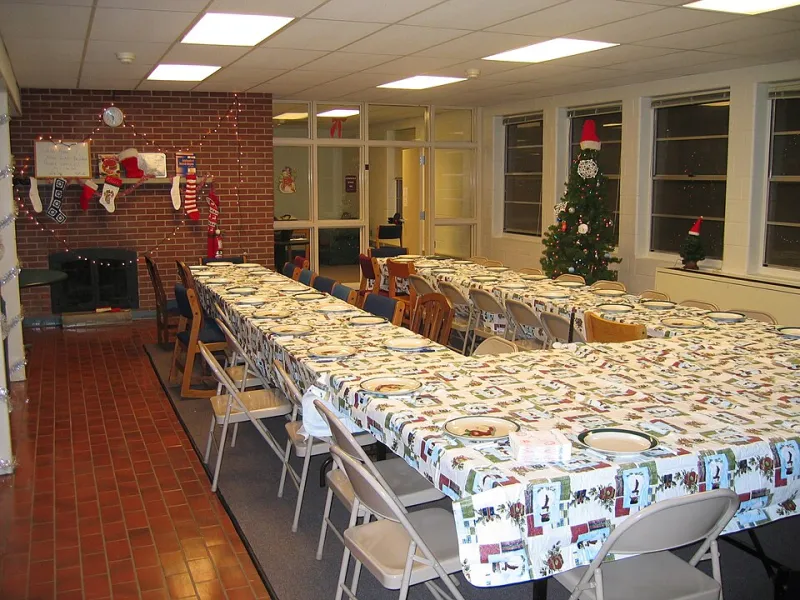
Photo: Runner1928, CC BY-SA 4.0, via Wikimedia Commons
Let's be honest about dinner theater for a second. The concept had its moment—somewhere between 1978 and the invention of Netflix—and then it gracefully retired. You sat at a table with your chicken marsala, watched a murder mystery unfold between the breadsticks and the dessert cart, and clapped politely at the end. It was entertainment at you. Passive. Contained. Safe.
What's replacing it is something messier, louder, and a whole lot more interesting.
Across the country, a loose but growing movement of community supper clubs, neighborhood storytelling dinners, and pop-up dining collectives is turning the simple act of eating together into something closer to a cultural happening. These aren't restaurants. They're not ticketed events at a performing arts center. They're something harder to categorize—and that's kind of the point.
The Table as a Stage
The format varies wildly. In Detroit, a collective called Gather & Tell hosts monthly dinners where each guest is asked to bring a story connected to the meal's theme—this month it's migration, next month it's first jobs. The food is cooked communally, the seating is intentionally mixed, and the stories range from hilarious to gutting to both at once.
In rural Arkansas, a woman named Deb runs what she calls a "neighborhood supper"—a rotating potluck where the only rule is that you have to sit next to someone you didn't come with. She started it during the pandemic out of what she describes as "pure desperation" and hasn't stopped since. About forty people show up each month.
In Chicago's Pilsen neighborhood, a group of Latinx artists and organizers hosts quarterly "mesa larga" events that combine a multi-course meal with live music, community announcements, and open-floor conversation about neighborhood issues. It's equal parts dinner party, town hall, and cultural showcase.
Different contexts, different aesthetics, different communities. But a consistent through-line: the meal is the medium, not just the backdrop.
Why Now?
This is the part where we're supposed to say something pithy about smartphones and social media. And look—it's not wrong that screen-mediated social life has left a lot of people feeling oddly empty. But the supper club movement isn't just a reaction to tech. It's responding to something older and deeper.
American social infrastructure has been quietly eroding for decades. Civic organizations that once created regular reasons for people to gather—Rotary clubs, union halls, church suppers, neighborhood associations—have hollowed out in many communities. Third places (the sociological term for spaces that aren't home or work) have become increasingly commercialized or simply scarce, especially in lower-income areas.
What supper clubs are doing, whether their organizers frame it this way or not, is rebuilding social infrastructure from the ground up. They're creating regular occasions for people to be in the same room, sharing something as fundamental as food, with the explicit expectation that conversation will happen.
"A restaurant gives you permission to stay in your own little bubble," says one supper club organizer in Nashville. "You're at your table, they're at theirs. We don't do that. There's one table. You're in it."
The Activism Angle
Some of these gatherings wear their politics openly. In Atlanta, a collective called Long Table hosts quarterly dinners specifically designed to bring together people from different neighborhoods, income levels, and racial backgrounds who would otherwise have no occasion to meet. The seating is deliberately assigned. The menu reflects the culinary traditions of multiple communities. The conversations are facilitated, gently.
Organizers are clear that this isn't charity or outreach. It's an attempt to create the conditions for genuine relationship-building across lines that American life tends to keep firmly in place.
In smaller towns, the activism is sometimes quieter but no less intentional. A supper club in rural Minnesota that started as a casual thing among neighbors has become an informal support network—people exchange information about local resources, show up for each other during hard times, and advocate collectively for things the community needs. The meal is the glue.
Food has always been political, of course. Who gets to eat, who cooks, whose culinary traditions get celebrated or ignored—these questions don't disappear when you sit down together. The best supper clubs seem to understand this and make space for it rather than papering over it with pleasantries.
Entertainment Without a Screen
From an entertainment standpoint, what's striking about this movement is how fully it rejects the passive consumption model that's dominated American leisure culture for the better part of a century. There's no content being delivered to you. You are the content. The person next to you is the content. The story that comes out of the conversation between your table and the one across the room is the content.
That's a genuinely different proposition than almost anything else on offer in American entertainment right now, and it seems to be resonating—particularly with people who have plenty of access to streaming services and podcasts and still feel like something is missing.
"I have every subscription," one regular attendee at a Brooklyn storytelling supper told us. "I watch things constantly. But I leave those dinners feeling more full—like, actually full—than I do after a weekend of bingeing something. It sounds corny but I don't know how else to say it."
The Challenges Are Real
It's worth being honest about the friction points. These gatherings can be cliquey if organizers aren't intentional about outreach and accessibility. They can inadvertently reproduce the social segregation they're trying to dissolve. The pop-up model, while flexible, can also be unstable—dependent on a single organizer's energy and bandwidth.
Cost is a genuine barrier in some formats. A curated pop-up dinner with locally sourced ingredients and a guest speaker can run fifty dollars a head, which prices out a lot of the people who might benefit most from the connection it offers. The movement's most promising iterations tend to be the ones that figure out how to make participation genuinely accessible—sliding scale, potluck format, community funding, or some combination thereof.
There's also the question of sustainability. A supper club that runs on one person's passion project energy has a shelf life. The ones that seem to last are the ones that distribute ownership across a community rather than centering it on a founder.
A New Kind of Cultural Ritual
Here's the thing about rituals: they don't just happen. Someone has to decide that this particular gathering, at this particular time, with these particular people, matters enough to make it happen again next month. And the month after that.
The people building community supper clubs across America are making exactly that decision. They're saying that sitting down together, eating food that someone made with care, and actually talking to each other is worth protecting and repeating. They're building new cultural rituals in real time, without a blueprint, in communities that are hungry—in every sense of the word—for exactly that.
Dinner theater gave you a show. The community supper club gives you a community. That's not a small upgrade.