Sawdust, Looms, and Belonging: The Quiet Revival of Folk Schools Reshaping Rural America
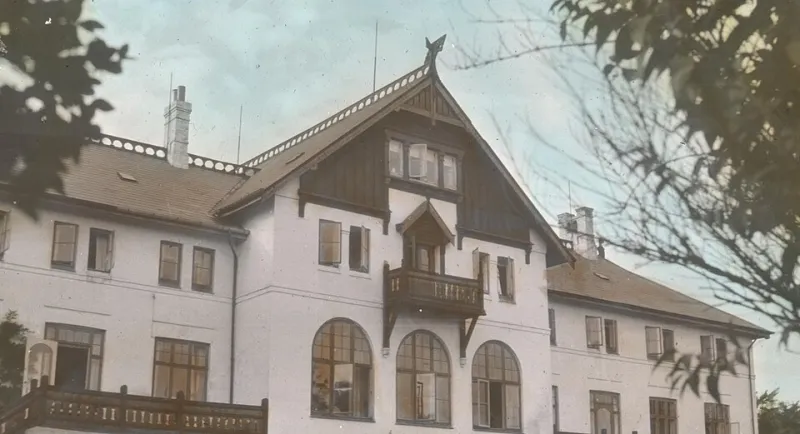
Photo: OSU Special Collections & Archives : Commons, No restrictions, via Wikimedia Commons
Walk into the John C. Campbell Folk School on a Tuesday morning in Brasstown, North Carolina, and you might find a retired schoolteacher learning to throw pottery next to a twenty-something web developer who drove six hours to get there. In the next room over, someone's grandmother is teaching a room full of strangers how to finger-weave the same patterns her own grandmother passed down to her. The smell of fresh-cut wood drifts in from the barn out back.
This isn't a museum. It's not a tourist attraction. It's a living, breathing community institution—and it's far from the only one making a comeback across rural America right now.
Something Old, Something New
The folk school concept isn't new. The American folk school movement drew heavily from the Danish folkehøjskole tradition of the 19th century—places where everyday people could gather, learn practical skills, and discuss the big questions of their lives. The Campbell Folk School itself has been running since 1925. But what's happening now feels different from a simple continuation of an old idea.
Over the last decade, enrollment at established folk schools has climbed steadily. New community craft schools are opening in places like rural Ohio, eastern Kentucky, and the Mississippi Delta. Organizations that started as small nonprofit workshops have expanded their programming, added residential courses, and watched waitlists grow. The Penland School of Crafts in North Carolina recently reported some of its strongest enrollment numbers in years. Smaller upstarts, like the Firefly Forge Community Workshop in rural West Virginia, have gone from operating out of a single donated barn to running year-round programming with a full roster of instructors.
So what's driving the surge? Ask the people showing up, and you'll hear a few consistent answers.
The Loneliness Factor
Rural isolation isn't a new story, but the last several years have sharpened it. Remote work brought some younger people back to small towns, but it didn't automatically bring community with it. Social media promised connection and often delivered the opposite. And in communities where the factory closed, the diner shut down, or the local church lost half its congregation, the question of where people actually gather has become urgent.
Folk schools are stepping into that gap in a way that feels organic rather than engineered. You can't passively attend a blacksmithing class. You have to show up, get your hands dirty, and ask for help. That built-in requirement for participation creates a kind of social glue that's surprisingly hard to manufacture any other way.
"People come here thinking they're going to learn how to make a spoon," says one instructor at a community wood school in rural Tennessee. "And they do learn that. But what they're really doing is spending eight hours with a group of strangers who all become something more than strangers by the end of the day. That's the actual product."
Preservation That Doesn't Feel Like a Museum
One of the things that makes the folk school revival particularly meaningful is what it's preserving—and how it's doing it. Regional craft traditions that were genuinely at risk of disappearing are finding new life not in display cases but in people's hands.
Appalachian chair-making. Midwestern rug-hooking. Ozark basket-weaving. Gullah Geechee indigo dyeing in the South Carolina Lowcountry. These aren't just decorative arts. They're encoded cultural knowledge—ways of solving problems, using local materials, and expressing identity that took generations to develop.
What's notable about the current revival is that it's not treating these traditions as frozen artifacts. Instructors are blending heritage techniques with contemporary materials and applications. A traditional Cherokee finger-weaving pattern might end up on a modern wall hanging. A 19th-century joinery method might be taught alongside modern woodworking tools. The goal isn't to recreate the past—it's to keep something alive by making it useful in the present.
For younger participants, many of whom grew up in communities where these traditions had already faded, the experience can feel like recovering something they didn't know they'd lost.
Intergenerational Magic (That Actually Works)
There's a lot of talk in community development circles about creating "intergenerational spaces." In practice, that often means putting older and younger people in the same room and hoping something happens. Folk schools seem to crack this problem naturally.
The knowledge transfer runs in both directions. An eighty-year-old quilter who learned her patterns from her own mother has something irreplaceable to offer. But younger participants often bring technical knowledge, fresh perspectives on design, and connections to wider networks that help these schools grow and evolve. The workshop structure creates a genuine reason for people of different ages to be in conversation—not a manufactured one.
In rural communities where the population skews older and younger residents often feel like there's nothing holding them there, these cross-generational connections carry real weight. Several folk school directors have noted that former students have gone on to start their own workshops, teach classes at community centers, or simply carry skills back into their neighborhoods that hadn't been seen there in a generation.
What Makes It Stick
Not every attempt to revive local craft education has taken off. What separates the folk schools that are thriving from the ones that fizzle? A few patterns emerge.
Successful schools tend to be deeply rooted in their specific regional context rather than offering a generic menu of crafts. They build strong relationships with local artists and craftspeople who become part of a living teaching community. They keep costs accessible—often through sliding-scale tuition, grants, and nonprofit structures—so that participation isn't limited to people who can afford a weekend retreat. And they treat the social experience as part of the core offering, not an afterthought.
The nonprofit model matters here. Because these schools aren't primarily chasing profit, they can prioritize community benefit in ways that a for-profit workshop simply can't. Many receive support from state arts councils, foundations, and individual donors who understand what's at stake culturally.
A Radical Idea Hiding in a Workshop
At its core, the folk school revival is making a quiet argument that runs counter to a lot of mainstream cultural assumptions. It's saying that the most meaningful entertainment and education isn't delivered to you through a screen—it's made with your hands, in the company of other people, in a specific place that has its own history and identity.
For communities that have spent decades watching their cultural institutions close and their young people leave, that argument lands with real force. A thriving folk school doesn't just teach woodworking or weaving. It says something about what a community values, what it wants to pass on, and who belongs in the room.
That's not a small thing. In a lot of places right now, it might be exactly the thing.