Hammers, Hay Bales, and Hello Neighbor: The Americans Turning Empty Lots Into Live Music Venues
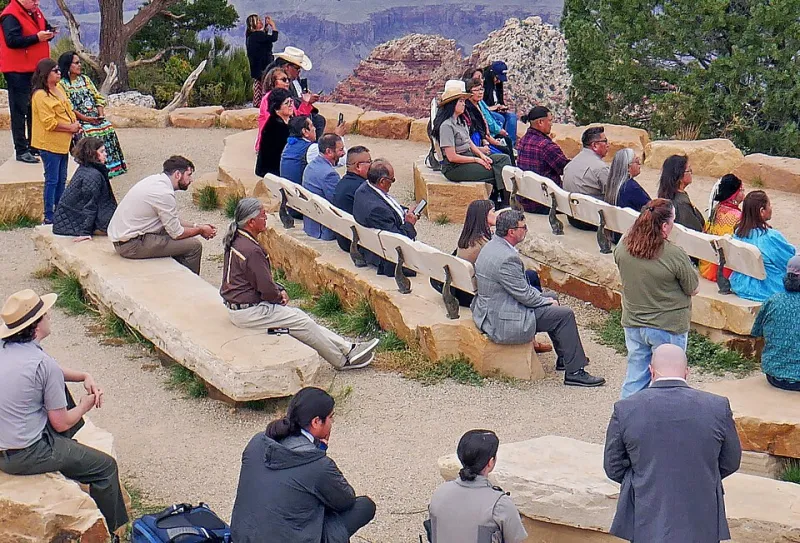
Photo: Grand Canyon National Park, CC BY 2.0, via Wikimedia Commons
Somewhere between a municipal parks budget meeting and a neighbor's offhand comment — "we should just build something" — a movement was born. It didn't announce itself with a press release. It showed up in the form of borrowed lumber, a volunteer weekend, and a few dozen folding chairs arranged in a semicircle behind a grain warehouse in central Indiana.
That's how the Millbrook Commons Stage came to life in 2021. A loose coalition of residents, a local arts nonprofit, and a sympathetic landowner pooled about $4,000 in small donations and sweat equity to create what is now a seasonal fixture in their community's cultural calendar. No ticketing app required. No corporate sponsor logos plastered across the backdrop. Just people, a stage, and the kind of shared ownership that makes a neighborhood feel like it actually means something.
This is the backyard amphitheater movement — and it's growing faster than most people realize.
Why Now, and Why This?
Let's be honest about the context here. Live entertainment in America has gotten expensive, centralized, and frankly exhausting. Major venue ticket fees have ballooned. Mid-size clubs have shuttered in waves. And for communities outside major metro areas, catching a live performance often means a two-hour drive and a hotel stay.
But something else is happening at the same time. People are craving connection in a way that feels almost urgent post-pandemic. They want to sit outside with their neighbors, hear music that doesn't need a stadium PA system to land, and feel like they're part of something real. The backyard amphitheater movement sits right at that intersection — practical need meets genuine hunger for community.
Organizations like NEPV know this tension well. When culture becomes too professionalized, too gatekept, it stops serving the people it was supposed to celebrate. These DIY outdoor venues are one of the most tangible responses to that problem that's emerged in years.
What These Spaces Actually Look Like
Forget what you picture when you hear "amphitheater." We're not talking about concrete bowls with corporate naming rights. The spaces driving this movement are scrappy, personal, and wildly varied.
In Vermont, a collective of artists converted a sloped hillside behind a community garden into a tiered seating area using reclaimed railroad ties and gravel paths. Capacity: maybe 80 people. Vibe: absolutely perfect. In suburban Phoenix, a neighborhood association worked with a local church to repurpose their rear parking lot every summer, bringing in portable staging and string lights to host monthly acoustic nights. In rural Mississippi, a family farm opened its land to a community-built outdoor stage that now hosts everything from gospel revivals to bluegrass jams to a surprisingly well-attended spoken word series.
The common thread isn't aesthetics or scale — it's intentionality. These spaces were built for someone specific, by people who actually know them.
The DIY Funding Playbook
One of the most interesting aspects of this movement is how these projects get funded. Spoiler: it rarely involves a single big check.
Most successful community amphitheater projects run on what organizers call a "layered funding" model. A small seed grant from a local arts council or community foundation gets the conversation started. Crowdfunding campaigns — often through platforms like GoFundMe or Patronicity — tap into neighborhood pride and generate modest but meaningful contributions from dozens of residents. Local businesses chip in materials or services in exchange for modest recognition. And then there's the labor: countless volunteer hours from people who just want to see the thing actually happen.
Some groups have gotten creative with revenue once the space is built. Pay-what-you-can admission for events. Hosting private gatherings like weddings or graduation parties during off-peak times. Partnering with local food vendors who share a percentage of sales. None of it makes anyone rich, but it keeps the lights on — or in this case, keeps the string lights strung.
Federal programs have also quietly become a resource. NEA grants, USDA rural development funds, and various state arts agency programs have all found their way into backyard amphitheater budgets. The trick, most organizers will tell you, is framing the project correctly: not as entertainment infrastructure, but as community health, civic engagement, and cultural preservation. Because honestly? That's exactly what it is.
The Cultural Weight of a Small Stage
Here's what gets lost when we talk about these spaces purely in logistical terms: they matter in ways that are hard to quantify.
When a 70-year-old retired teacher sits in a handmade wooden seat and watches a local teenager perform an original song for the first time, something is happening that no ticketing algorithm can replicate. When a neighborhood that's spent years subdivided by socioeconomic anxiety gathers around a shared stage on a Saturday evening, the casual mixing that follows — the conversations, the introductions, the "wait, you live two streets over?" moments — those are the building blocks of actual community.
Researchers who study social cohesion have a term for the kind of infrastructure that enables these interactions: "third places." Not home, not work, but somewhere in between — a space where people gather without transactional purpose. Libraries, barbershops, parks. Community amphitheaters, it turns out, can be powerful third places, especially in areas where traditional gathering spots have disappeared.
Challenges Worth Naming
This movement isn't without friction. Zoning regulations are a real headache — what counts as a "permanent structure" varies wildly by municipality, and some well-meaning projects have run into unexpected permit battles. Noise ordinances have sidelined more than a few evening events. And the volunteer labor model, while beautiful in theory, can burn people out if a small core group ends up carrying most of the weight.
There's also the question of who these spaces are built for. A community amphitheater that only programs one type of music, or that's accessible only to people with cars, or that's physically inaccessible to people with disabilities, isn't actually serving its community — it's serving a subset of it. The most thoughtful organizers are asking these questions early and building the answers into their design and programming decisions.
A Stage That Belongs to Everyone
What makes the backyard amphitheater movement feel genuinely different from other cultural trends is that it's not trying to scale. Nobody's franchising this. There's no venture capital involved. Each space is a one-of-a-kind artifact of the specific community that built it, shaped by local geography, local relationships, and local need.
That's not a limitation. That's the whole point.
The next time you drive through a small town and spot a hand-painted sign advertising a free outdoor concert on some church lawn or community green — stop. Pull over. Grab a seat on whatever mismatched seating they've arranged. Because what you're witnessing isn't a quaint local curiosity. It's Americans doing what they've always done when official culture fails to show up: building something themselves, from scratch, and inviting everyone in.
The stage is small. The community around it is not.