Recipes With Return Addresses: The Block Associations Turning Kitchen Traditions Into Living Archives
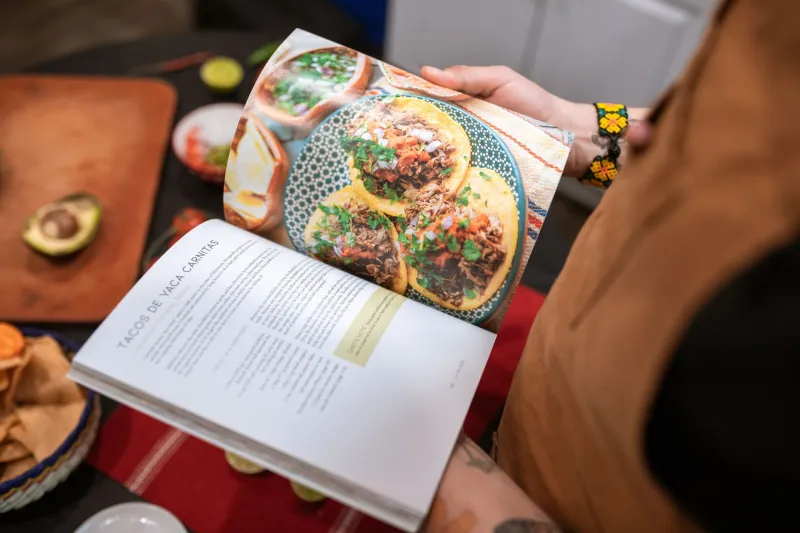
There's a spiral-bound cookbook sitting on a folding table at a church hall in Cleveland's Detroit-Shoreway neighborhood. It costs eight dollars. It has a hand-drawn cover, a few typos, and somewhere around ninety recipes contributed by families on four city blocks. It also contains, if you know how to read it, about two hundred years of migration history, survival, and love.
That's not an accident. That's the whole point.
Across the United States, a grassroots movement is quietly gaining momentum inside block associations, neighborhood councils, and community nonprofits. The mission: compile the recipes that live in people's heads and on handwritten index cards before they disappear entirely, then publish them as tangible, shareable artifacts of who a neighborhood actually is. These aren't glossy food-media productions. They're deeply local, occasionally chaotic, and almost always profound.
More Than a Potluck List
It would be easy to dismiss these projects as feel-good community activities — the kind of thing that earns a paragraph in a local paper and then gets forgotten. But spend any time talking to the people organizing them, and you realize the stakes feel genuinely high.
In neighborhoods with large immigrant populations, a cookbook isn't just a recipe collection. It's documentation. When a Guatemalan grandmother in Houston's East End submits her recado rojo, she's preserving a cooking method that predates her immigration by generations. When a Vietnamese family in New Orleans' Versailles neighborhood shares their version of bún bò Huế, adapted after decades of living in Louisiana, they're recording a cultural negotiation in real time.
"We kept saying we needed an oral history project, but nobody had the equipment or the time," says one organizer from a Chicago neighborhood association who asked to remain anonymous because the cookbook is still in production. "Then someone said, just start with food. Everyone has something to say about food."
The genius of the cookbook format is that it lowers the barrier to participation. You don't need to be comfortable talking into a microphone or sitting for a recorded interview. You just need to write down what you already know.
The Process Is Half the Story
Most of these projects start the same way: someone floats the idea at a neighborhood meeting, a small committee forms, and then the real work begins — which is mostly just knocking on doors and asking people to share.
That process alone tends to generate something communities didn't expect: actual conversation. Neighbors who've lived twenty feet apart for a decade end up in each other's kitchens, watching techniques get demonstrated that can't fully be captured in text. "My neighbor showed me how her mother used to press the dough," one participant from a Queens, New York project recalled in a community newsletter. "I've lived next to her for eleven years. I didn't even know her mother had passed."
The recipes themselves often arrive with context attached — little paragraphs about where a dish came from, who taught it, what occasion it belongs to. Editors of these community cookbooks frequently describe the hardest part of the job as deciding how much of that context to include without turning a cookbook into a memoir anthology. The answer most groups land on: keep everything. The typos, the personal notes, the slightly inconsistent measurements. That's the texture of real life.
Self-Publishing as an Act of Sovereignty
The production side of these projects has gotten dramatically more accessible in the last decade. Print-on-demand services, local print shops willing to work with community budgets, and free design tools have made it possible for a block association operating on bake-sale funds to produce something genuinely professional-looking. Some groups sell their cookbooks at neighborhood events and farmers markets, using the modest proceeds to fund the next print run or a different community initiative entirely.
There's something quietly political about this, too. These communities are choosing to document themselves on their own terms, without waiting for a university archive or a food magazine to decide their stories are worth telling. The editorial control stays local. Nobody's grandmother gets reduced to a one-line ethnic descriptor in a sidebar.
Some neighborhood nonprofits have started treating cookbook projects as formal programming, building them into their community engagement calendars alongside festivals and civic meetings. A few have gone further, partnering with local libraries to ensure copies enter the permanent collection — a small but meaningful act of insisting that these stories belong in the historical record.
What Gets Preserved When We Write It Down
Food historians will tell you that recipes are among the most unreliable historical documents — they shift constantly with availability, preference, and the specific logic of individual cooks. But that instability is also what makes them so honest. A recipe that has traveled from Oaxaca to Oregon and picked up local green chiles along the way isn't a corrupted version of something authentic. It's a document of a life actually lived.
Neighborhood cookbooks capture that living quality in a way that more formal archives often can't. They're snapshots of a community at a specific moment, but they also carry the echoes of everywhere those families have been. Read enough of them and you start to understand a neighborhood's full geography — not just its streets, but its histories.
For the families contributing recipes, there's often a personal urgency driving participation. Generational cooking knowledge has a way of vanishing fast. The grandmother who never measured anything, who learned by watching and doing, may not have anyone in the family who stood beside her long enough to absorb it all. A cookbook project creates a structured reason to sit down and reconstruct what's still recoverable.
The Shelf Life of a Spiral Binding
These books don't always look like they'll last. The binding is sometimes plastic comb. The paper is sometimes standard copy-shop stock. But the communities making them aren't necessarily thinking about archival permanence — they're thinking about right now, about the neighbor who just moved in and needs to understand where they've landed, or the teenager who doesn't know yet that their family's cooking is extraordinary.
And sometimes, a decade later, someone pulls that spiral-bound book off a shelf and realizes it's the only place a particular story still exists. That eight-dollar cookbook in Cleveland isn't just a recipe collection. It's evidence that a community was here, that it cooked and gathered and cared enough to write it all down.
That's not a small thing. That's exactly the kind of cultural infrastructure that doesn't get built unless ordinary people decide to build it themselves.