No City Required: How Rural Producers Are Building Real Studios in the Most Unexpected Places
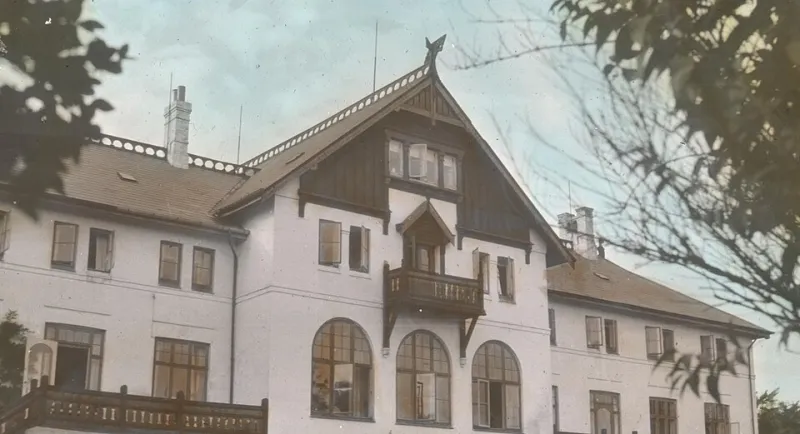
Photo: Franz van Duns, CC BY-SA 4.0, via Wikimedia Commons
For a long time, the story went something like this: you're talented, you're serious, so you pack up and move somewhere with a real studio. Nashville. Atlanta. Los Angeles. You leave your hometown behind, and maybe — if things go well — you make it.
That story is getting rewritten. And it's happening in places like Harlan County, Kentucky. In the Mississippi Delta. In small farming communities across the Great Plains where the nearest major city is a three-hour drive. Musicians and producers in these spots aren't waiting for opportunity to show up. They're building it themselves — one foam panel, one USB interface, and one shared tutorial at a time.
The Gear Got Cheaper. The Knowledge Got Shareable.
The shift started with technology, honestly. A decade ago, building a studio that could produce anything close to commercial quality required serious capital — tens of thousands of dollars in equipment, a dedicated space, professional acoustic treatment. The barrier wasn't just money. It was access to people who knew how to use the gear.
Things look different now. A capable audio interface runs under $200. Digital audio workstations like GarageBand are free, and professional-grade options like Reaper cost less than a tank of gas. YouTube has turned bedroom producers into self-taught engineers, and communities on Reddit, Discord, and Facebook have replaced the mentorship that used to require physical proximity to a music industry hub.
For rural artists, that combination — affordable tools plus accessible knowledge — has been genuinely transformative. "I watched probably 400 hours of tutorials before I recorded my first real session," says one producer in rural West Virginia who asked to go by his handle, Swamp Wick. "I didn't know anybody in music. I just kept watching and kept trying."
His setup? A converted storage room off his parents' garage, lined with moving blankets and homemade bass traps built from Owens Corning rigid fiberglass. It sounds, according to the artists who've recorded there, like a real studio.
Barns, Basements, and One Very Determined Church Choir Director
The spaces these studios occupy say a lot about the communities they serve. In rural Georgia, a former tobacco curing barn has been retrofitted with proper HVAC, floating floors, and a modest but functional control room. The owner, a retired electrician who started playing guitar in his fifties, now records gospel acts, country singers, and the occasional hip-hop artist from three counties over.
In rural Minnesota, a church music director convinced her congregation to let her use the basement on weekday afternoons. She records local folk artists, youth groups, and community choirs — often for free or at cost — because she believes that documentation matters. "These songs should exist somewhere," she told a local paper earlier this year. "Not just in people's heads."
What's striking about these spaces isn't just that they exist. It's that they're functioning as community anchors. People come to record, sure. But they also come to learn, to collaborate, to find out who else in their area is making music they didn't know about.
Peer Mentorship as Infrastructure
Here's where it gets really interesting for anyone paying attention to how creative communities actually grow: these studios aren't operating in isolation. Many of them are plugging into informal networks where producers share techniques, troubleshoot each other's mixes, and occasionally pool resources to buy equipment they couldn't afford individually.
Some of these networks have loose organizational structures — online groups, occasional meetups, shared Google Drives full of sample packs and plugin presets. Others are purely relational: I'll show you how I got that drum sound if you show me how you're handling vocal reverb in a room with no treatment.
That peer mentorship model is doing something that formal music education in rural areas often hasn't: it's meeting people where they are, both geographically and financially. Nobody's paying $40,000 a year in tuition. Nobody's relocating. The knowledge circulates through the community and stays there.
"I've taught probably fifteen people how to use a DAW in the last two years," says a producer in rural Louisiana who runs sessions out of a converted double-wide. "Some of them are better than me now. That's the point."
What Gets Made Here Sounds Like Here
There's a cultural argument to be made alongside the practical one. When rural artists don't have to leave their communities to make music, the music they make tends to reflect those communities more honestly. It's not filtered through the preferences of a label A&R rep in a coastal city. It's not softened for a market that doesn't know the reference points.
The delta blues recorded in a Mississippi barn sounds different from the delta blues recorded in a Chicago studio — not worse, just more specific. More rooted. The same principle applies to Appalachian folk, to Tejano music coming out of South Texas, to the country-rap hybrids emerging from rural communities that don't fit neatly into any existing genre box.
That specificity has value. And increasingly, listeners seem to recognize it. Independent releases from rural DIY studios are finding audiences online that would have been impossible to reach even ten years ago. Bandcamp, SoundCloud, and TikTok don't care where you recorded. They care whether the music connects.
The Ecosystem Effect
What's emerging in some of these communities goes beyond individual studios. When multiple small recording spaces exist in a region, something like a local music ecosystem starts to take shape. There are more artists recording, which means more finished music, which means more local shows, which means more people paying attention to what's being made nearby.
Local labels — some of them barely more than a shared email address and a distribution account — start to form. Collaborations happen between artists who never would have met without a shared recording space to bring them together. A community that didn't think of itself as having a music scene starts to realize it does.
For an organization like NEPV, which has always believed that culture doesn't require a zip code to be legitimate, this is exactly the kind of story worth paying attention to. Community infrastructure doesn't always look like a concert hall or a conservatory. Sometimes it looks like a barn with acoustic foam on the walls and a laptop running Reaper.
You Don't Have to Leave to Make Something Real
The rural DIY studio movement isn't going to replace Nashville or put major studios out of business. That's not what it's trying to do. What it's doing is something arguably more important: it's making music production a viable activity for people who were previously told — explicitly or implicitly — that where they lived made it impossible.
That message matters. It matters for the fifteen-year-old in a small Kentucky town who's been making beats on her phone and doesn't know that a real studio might be thirty minutes away. It matters for the gospel quartet that's been singing in the same church for twenty years and never had a proper recording to share with their families.
The gear is affordable. The knowledge is out there. The communities are ready. The only thing that was ever missing was the belief that it could happen here — and that belief is changing, one converted barn at a time.