No Cash, No Problem: The Backyard Barter Movement Turning Neighbors Into Each Other's Greatest Resource
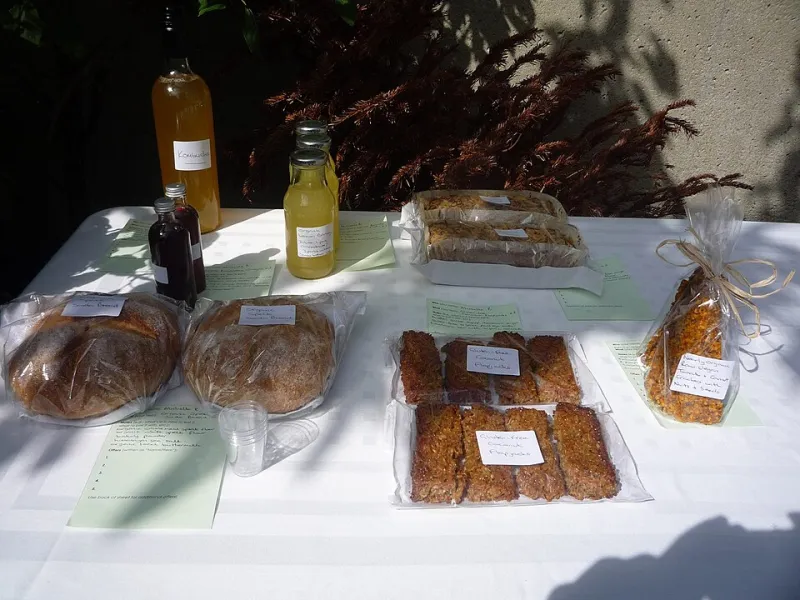
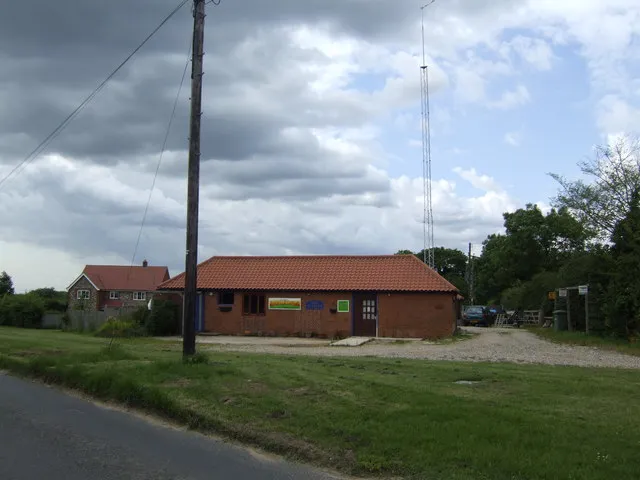
Photo: Nigelj, CC BY-SA 3.0, via Wikimedia Commons
There's a folding table in a church parking lot in Dayton, Ohio, and on any given Saturday morning it holds a pretty unusual spread. A hand-drawn sign offering guitar lessons. A mason jar of homemade hot sauce with a note attached: trade for anything useful. A retired electrician with a legal pad, ready to explain basic wiring to anyone who'll teach him to make tamales in return.
No Venmo. No price tags. No credentials required.
This is what a skill swap looks like in 2025, and they're happening in more American backyards, church halls, library parking lots, and community centers than most people realize.
What Is a Skill Swap, Exactly?
The concept is almost embarrassingly simple: you bring something you know how to do, and you leave with something you didn't know before. Carpentry, canning, calligraphy, coding, storytelling, sourdough, tax prep — the currency is competence, and everyone's got some.
Barter networks and skill-exchange events have technically existed for decades, but something shifted in the last few years. Call it pandemic-era mutual aid energy that never fully dissipated. Call it inflation-driven creativity. Call it people finally getting tired of the idea that everything worth knowing has to come with a subscription fee or a professional certification.
Whatever the cause, community organizers across the country are reporting a real uptick in participation — and more importantly, in the range of people showing up.
The Unlikely Friendships Happening at the Table
One of the most striking things about these events is who ends up sitting next to each other.
In Knoxville, Tennessee, a 72-year-old retired schoolteacher named Doris has been attending a monthly skill swap organized by a local neighborhood association for about a year. She shows up with what she calls her "grandmother toolkit" — quilting patterns, canning techniques, and a working knowledge of medicinal herbs she learned from her own mother. In exchange, she's picked up basic smartphone troubleshooting, a few phrases in Somali from a neighbor who resettled in the area three years ago, and an unexpected passion for urban sketching.
"I thought I was too old to learn new things," she said at a recent event. "Turns out I was just in the wrong room."
That's the thing about these swap gatherings — they don't sort people by age bracket, income level, or educational background the way most cultural institutions do. A teenager who fixes bikes sits beside a retired engineer. A single mom who knows how to stretch a grocery budget shares a table with a culinary school dropout who can teach knife skills. The hierarchies that usually organize American social life kind of dissolve when everyone's there to both give and receive.
Oral Histories as Currency
Not every swap is about a practical skill. Some of the most meaningful exchanges happening at these events involve something harder to quantify: stories.
Several barter networks have started incorporating what organizers call "story trades" — structured, informal conversations where someone with lived experience in a particular era, place, or community shares memories in exchange for help with something tangible. An 80-year-old Korean War veteran trades an hour of firsthand history for help setting up a photo album digitization project. A woman who grew up in rural Appalachia during the 1960s shares what daily life actually looked like in exchange for a beginner's lesson in watercolor painting.
It sounds simple, but the impact is real. These aren't oral history projects with a clipboard and an institutional agenda. They're just two people deciding that what each of them carries is worth something to the other.
For community organizations running these events, that shift in framing matters a lot. When a story is treated as a form of payment rather than a charity donation to some archive, the person telling it stands a little taller.
The Economics (or Anti-Economics) of It All
Let's be honest about what's driving some of this: money is tight for a lot of Americans, and it has been for a while. Learning a new skill or accessing cultural programming often costs money that people simply don't have. A weekend pottery workshop can run $150. A single cooking class at a culinary studio might be $85. Private music lessons? Don't even ask.
Skill swaps sidestep all of that. They operate on the premise that economic participation shouldn't be the price of admission to community life — which, when you say it out loud, sounds almost radical, but really just sounds like what neighborhoods used to be.
That said, organizers are quick to push back on the idea that these events are only for people who can't afford alternatives. Plenty of attendees are middle-class professionals who come not because they're broke but because they're lonely, or because they want to feel useful, or because they're genuinely curious about the person who lives four blocks away but might as well be a stranger.
"Money actually gets in the way sometimes," said one organizer running a monthly swap in a mid-sized Illinois city. "When there's a price, people become consumers. When there's a trade, they become participants. That's a completely different relationship."
What Community Organizations Are Getting Right
The swaps that seem to stick — the ones that grow year over year and build genuine social fabric — tend to share a few things in common.
First, they're low-stakes on purpose. Nobody's vetted, nobody's certified, and nobody's judged for being a beginner. The whole point is that partial knowledge is still knowledge worth sharing.
Second, the best-run events make space for spontaneity. Sure, there's usually a sign-up sheet or a loose schedule, but the magic tends to happen in the margins — the conversation that starts between two people waiting for their session to begin, the impromptu demonstration that draws a small crowd, the trade that wasn't planned but made total sense.
Third, and maybe most importantly, they treat cultural participation as a right rather than a reward. You don't have to earn your place at the table by being talented enough or credentialed enough or wealthy enough. You just have to show up willing to exchange something — even if that something is just your attention and your time.
A Different Kind of Neighborhood Watch
There's a quiet argument embedded in the skill swap movement, and it's worth naming directly: communities are strongest when people need each other.
For a long time, the dominant cultural message in America has been that self-sufficiency is the goal — that needing help is a weakness and that paying for services is more dignified than asking a neighbor. The swap model pushes back on all of that. It says interdependence isn't a failure state. It's actually the point.
When Doris in Knoxville trades quilting patterns for Somali phrases, she's not just learning a language. She's building a relationship that might matter in a hundred small ways over the next decade. When the retired electrician in Dayton gets his tamale lesson, he's not just getting a recipe. He's getting a reason to come back next month.
That's the real product of these events. Not the skills. The ties.
And in a country that keeps talking about how divided and isolated everyone feels, a folding table in a church parking lot with a jar of hot sauce and a legal pad might be doing more connective work than we give it credit for.