Point and Record: Ordinary Families Are Becoming Their Own Documentarians Before the Stories Disappear
Photo: elderly grandparent being filmed on smartphone family living room interview, via blogger.googleusercontent.com
Somewhere in rural eastern Tennessee, a woman named Darlene set up a secondhand ring light in her mother's living room, propped her iPhone on a stack of cookbooks, and hit record. Her mother, eighty-three years old and sharp as a tack, talked for four hours straight — about picking tobacco as a girl, about the cousin who ran off to Detroit and never came back, about the recipe for apple stack cake that existed only in her head. Three months later, Darlene's mother passed away. That footage is now the most precious thing Darlene owns.
Stories like hers are playing out in living rooms, on back porches, and around kitchen tables all over the United States. A quiet, grassroots movement of ordinary people — not filmmakers, not archivists, not journalists — has taken shape, and its entire mission is to capture the human record before it walks out the door forever.
The Clock Nobody Talks About
Here's the uncomfortable truth that sits underneath all of this: every single day, irreplaceable stories vanish. An elder dies. A dialect fades. A way of doing something — canning tomatoes, calling hogs, navigating a neighborhood that no longer exists — disappears with the last person who knew how. And unlike a building that gets torn down or a newspaper that shuts its doors, no one files a report. No one marks the loss.
Community organizations and cultural nonprofits have been sounding this alarm for decades. Groups focused on heritage preservation, indigenous oral traditions, and immigrant community memory have long understood that the informal, lived-in knowledge people carry doesn't survive on its own. It needs someone to ask. It needs someone to listen. And increasingly, it needs someone to hit record.
What's changed in the last several years is that the barrier to doing exactly that has essentially collapsed. A smartphone in 2024 shoots better video than a professional documentary crew could have managed twenty years ago. Affordable lapel microphones run thirty dollars on Amazon. Free editing software like DaVinci Resolve or even iMovie is more than capable of producing something watchable and lasting. The tools are there. The question now is just whether families decide to use them.
Who's Actually Doing This
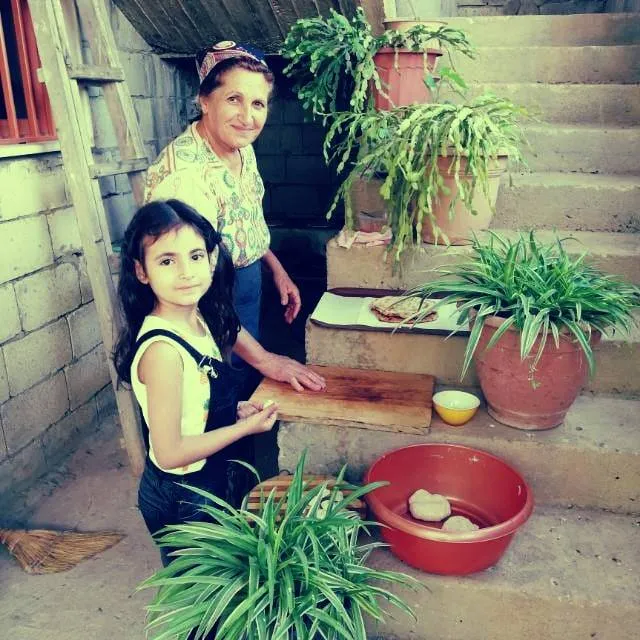
The people leading this movement aren't film school graduates. They're a retired postal worker in New Mexico who started recording her Pueblo grandmother's stories after a family reunion conversation scared her straight. They're a high school junior in South Carolina who interviewed every living great-aunt and great-uncle for a school project and ended up with six hours of footage he can't stop watching. They're a Vietnamese-American family in Houston who realized their youngest generation spoke almost no Vietnamese and decided that video was the bridge they could actually build.
What connects all of them is a specific kind of urgency — not panic exactly, but a dawning awareness that waiting for the right moment, the right equipment, or the right level of confidence is itself a choice with consequences.
Organizations like StoryCorps have spent years making the case for recorded oral history, and their work has given a lot of families permission to try something similar on their own. Local libraries, community centers, and cultural nonprofits in many cities now offer workshops specifically aimed at helping regular people conduct and preserve family interviews. Some focus on technical basics. Others go deeper into the art of asking good questions — because it turns out that "tell me about your life" is a much harder prompt than it sounds, and "what was the smell of your grandmother's kitchen" tends to unlock things that timelines and dates never will.
The Craft of Asking
If there's a skill at the center of all this, it's interviewing. And interviewing well is genuinely hard, even when you love the person across the table from you. Maybe especially then.
Families who've done this successfully tend to share a few lessons. First, preparation matters — coming in with a loose list of topics, not a rigid script, gives the conversation room to wander productively. Second, silence is your friend. The instinct to fill every pause kills stories before they finish forming. Third, go back. One session is rarely enough. The second or third conversation often surfaces the things the first one only hinted at.
There's also the question of what you do with the footage once you have it. A raw, unedited four-hour recording is valuable — but it's also something most family members will never sit down and watch. Even a light edit, pulling out the strongest twenty or thirty minutes and adding a simple title card, transforms raw footage into something that actually gets shared, saved, and passed down. Cloud storage, external hard drives, and platforms like Google Photos or even a private YouTube channel give families options for preservation that didn't exist a generation ago.
It Doesn't Have to Be Perfect
This is worth saying out loud, because perfectionism kills more family documentaries than any technical limitation ever has. The shaky handheld shot. The ambient noise from the TV someone forgot to turn off. The moment where the camera runs out of storage and cuts off mid-sentence. None of that matters the way people think it does.
What matters is that the person is on screen, talking, alive in the frame. What matters is that their voice exists somewhere outside of memory. A slightly overexposed video of your grandfather describing what it felt like to come home from Korea will mean more to your grandchildren than a technically pristine talking-head interview with a stranger. The imperfection is part of it. It's proof that a real person, in a real room, decided this was worth saving.
Cultural advocates who work in community documentation have been making this argument for years — that the standard of "good enough to matter" is much lower than people imagine, and the standard of "too late to try" arrives faster than anyone expects.
Why NEPV Cares About This
At NEPV, we talk a lot about connecting communities through culture and story — and the family documentary movement is one of the most direct expressions of that idea we've come across. These aren't films made for festivals or platforms or audiences of strangers. They're made for the people in the room, and for the people who'll come after. They're made because someone in a family decided that a story deserved to exist, regardless of whether anyone outside the household would ever see it.
That's a radical act, actually. In a media landscape that's constantly asking whether content will perform, whether it'll reach an audience, whether it'll get picked up — the family documentarian is operating by a completely different logic. The only metric that matters is whether the story got told before it couldn't be.
If you've been thinking about doing this — if there's someone in your family whose voice you keep meaning to record, whose memories you keep meaning to ask about — this is the article that's supposed to make you put the phone down, then pick it back up and point it at them.
Don't wait for the right moment. The right moment was a year ago. The second-best time is now.