Flour, Thread, and Memory: Why American Families Are Reclaiming the Crafts Their Grandparents Almost Took to the Grave
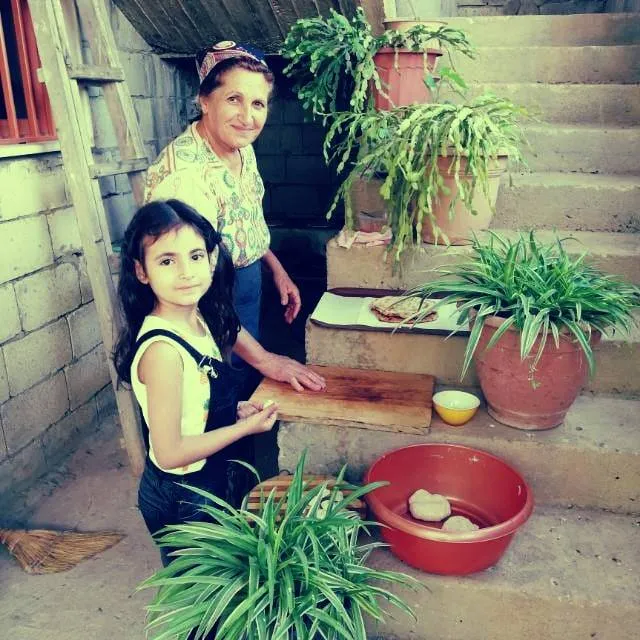
Photo: Opui42, CC BY-SA 4.0, via Wikimedia Commons
Somewhere in eastern Tennessee, a seventy-eight-year-old woman named Doris is teaching her eleven-year-old granddaughter how to split white oak into thin, pliable strips for basket weaving. The child's hands are small and uncertain. Doris's are steady and sure from decades of practice. Neither of them is thinking about TikTok.
That scene — unglamorous, unhurried, and deeply intentional — is playing out in variations all over the United States right now. Families who might otherwise spend evenings staring at separate screens are instead gathering around looms, workbenches, cast-iron skillets, and sewing frames. They're doing it because someone in the family finally said out loud what a lot of people have been quietly thinking: if we don't learn this now, it's gone.
The Urgency Nobody Talks About Enough
Craft traditions don't disappear dramatically. There's no announcement, no farewell tour. One year a grandmother is making tamales from scratch; a few years later she's gone, and nobody wrote down the masa ratio. A grandfather who could build a rocking chair by hand passes without ever showing his son which chisel to reach for first. The knowledge just quietly leaves with them.
What's different today is that more families are catching it before that happens — and they're doing it with a kind of deliberate urgency that feels new. Community organizations, family networks, and informal neighborhood groups are actively creating space for what researchers sometimes call "intergenerational skill transmission," though most people doing it would just call it spending time together.
For communities tied to specific cultural identities — Indigenous families preserving beadwork patterns, Hmong households maintaining textile traditions brought from Southeast Asia, Black Southern families keeping alive the foodways of their ancestors — the stakes feel especially high. These aren't just hobbies. They're living documents of who a community is and where it came from.
What's Actually Happening at the Table
In rural Minnesota, a loose network of families has started hosting what they call "craft weekends" — informal gatherings where older community members lead hands-on sessions in everything from rug hooking to traditional Scandinavian rosemaling. No formal curriculum. No certificates. Just someone who knows something sitting next to someone who wants to learn.
In New Mexico, a multigenerational Pueblo family has begun video-documenting their pottery sessions — not to post online, but to keep as a private family archive. The grandmother leads. The adult children assist. The grandkids watch, ask questions, and eventually get their hands in the clay. The recordings exist so that someday, if anyone forgets a step or needs to teach a great-grandchild, the memory is still there.
Down in South Carolina's Lowcountry, sweetgrass basket weaving — a tradition with roots in West African craft practices brought over by enslaved people — has been experiencing a slow, community-driven revival. Families who carry that lineage are making a point of teaching children young, even when the children would rather be doing something else. "You don't always want to learn it at ten," one mother told a local journalist. "But you're grateful you know it at thirty."
Why Screens Aren't the Enemy (But the Kitchen Table Wins Anyway)
It would be easy to frame this as an anti-technology story, but that's not quite right. A lot of families use YouTube tutorials as a starting point, or find communities of practice through Facebook groups and subreddits. The internet has actually helped some people rediscover skills their own families lost a generation back — someone whose grandmother quilted but didn't teach their parents can now find patterns, techniques, and even virtual mentors online.
But there's something that digital resources can't fully replicate, and families engaged in this movement talk about it constantly: the feel of being taught by someone who loves you. The way a grandparent corrects your grip on a hand plane is different from a YouTube comment. The smell of your mother's kitchen while she explains why the dough needs to rest. The story that comes out while hands are busy — about where the pattern came from, who taught her, what the occasion was.
Those contextual layers are what transform a skill into a tradition. And they mostly only happen in person, across generations, with time to spare.
Building Networks Beyond the Family
Not every family has an elder still living who carries these skills. Some traditions skipped a generation or two entirely. That's where community organizations are stepping in to fill the gap.
Libraries in small towns from Vermont to Oregon have started hosting "skills preservation" evenings — essentially open workshops where older community members teach anyone who shows up. Craft guilds, 4-H chapters, and historical societies are formalizing apprenticeship-style programs that pair experienced practitioners with younger learners. Some community centers are creating what they call "living libraries" — not of books, but of people. You check out an hour with someone who knows how to can vegetables, tan leather, or hand-dye fabric with natural materials.
The documentation side of things is growing too. Families are being encouraged to record not just the techniques but the stories around them — who learned from whom, what occasions called for this skill, what variations existed between regions or families. Some of these archives are being contributed to local historical societies. Others stay private, stored on a hard drive or in a family Google folder, passed down like any other inheritance.
What Gets Saved When a Craft Gets Saved
Ask anyone deep in this movement what they're really preserving, and the answer usually isn't the object. It's not the quilt or the basket or the jar of pickles, though those are real and beautiful. It's the relationship the craft creates — the reason to sit together, the shared language of making, the pride that comes from producing something with your own hands and knowing exactly where it came from.
There's also something quietly radical about it in a culture that tends to value speed and convenience above all else. Choosing to spend three weekends learning to hand-stitch a binding on a quilt is a kind of resistance. It says: this is worth my time. You are worth my time.
Doris and her granddaughter in Tennessee will probably finish that basket before summer ends. The girl's strips will be a little uneven. Doris will show her how to correct the tension without pulling too hard. And somewhere in that exchange, something will be saved that no app could have archived — the particular way knowledge moves between people who love each other, carried in the hands, stored in the body, ready to be passed on again.
That's the curriculum nobody had to design. It's been running for generations. It just needs someone to keep showing up to teach it.