More Than a Music Store: How Indie Record Shops Became the New Town Square
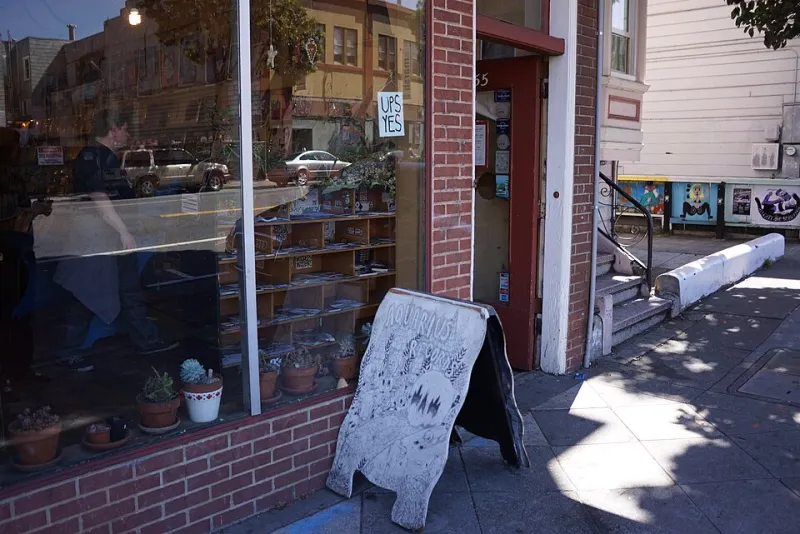
Photo: Plateaueatplau, CC BY-SA 4.0, via Wikimedia Commons
Walk into Turnstile Records in Bowling Green, Kentucky on a Saturday afternoon and you might think you've wandered into the wrong place. There's a folding table near the back loaded with homemade chili, a guy in a flannel jacket arguing passionately about the correct ranking of Tom Waits albums, and somewhere between the jazz section and the used soul bins, two college students are discovering they grew up three towns apart. Oh, and records are playing — loud, warm, and very much on purpose.
This is what the vinyl revival actually looks like when you zoom past the think pieces about nostalgia and get into the stores themselves. It's less about analog warmth versus digital clarity and more about the fact that people are desperately, almost embarrassingly hungry for places that feel like somewhere.
The Numbers Tell One Story. The Rooms Tell Another.
Vinyl sales in the US have been climbing steadily for over a decade, crossing the $1 billion mark in 2022 for the first time since the 1980s. The Recording Industry Association of America tracks those figures religiously. What doesn't show up in any spreadsheet is the hours people spend inside these stores after they've already paid for their records.
Store owners across the country will tell you the same thing, almost word for word: people aren't leaving. They come in for a record, they end up staying for two hours. They come back the following weekend not because they need anything but because they want to be around people who get it.
That's not an accident. A growing number of independent shop owners have made a deliberate design choice — build the store as a living room first, a retail space second.
Designing for Lingering
Marta Delgado opened Side B Records in Las Cruces, New Mexico about four years ago with a layout her accountant called "commercially questionable." A third of the floor space is dedicated to a seating area with mismatched couches, a decent sound system, and a turntable anyone can approach and ask to use. The record bins are there, but they're almost secondary to the vibe she was chasing.
"I wanted it to feel like coming over to a friend's house who has really good taste," Delgado says. "Not a museum, not a boutique. Somewhere you could sit down and not feel like you were being watched for shoplifting."
Side B hosts listening parties every other Thursday — themed evenings where regulars and first-timers alike show up to hear a full album played front to back, lights low, phones away. Sometimes it's a classic record, sometimes it's something local. Either way, the room fills up. Delgado started a waitlist after the third event.
Similar stories are playing out in places like Fayetteville, Arkansas, where a shop called Groove Merchant has become the unofficial meeting point for the city's scattered music scene, and in Marquette, Michigan, where Northwoods Vinyl runs monthly "artist swap" nights that have quietly launched at least a handful of collaborative projects between musicians who'd never crossed paths before.
The Social Void That Streaming Left Behind
It would be too easy to frame this as a backlash against Spotify or Apple Music. The reality is more layered. Streaming didn't kill music — it made music infinitely accessible and simultaneously stripped away almost every reason to talk about it with another human being in real time.
When you discover an album alone in your earbuds on a Tuesday commute, there's no moment of shared revelation. There's no one to grab by the arm and say, wait, did you hear that transition? The algorithm knows what you like, but it doesn't know your name, and it definitely can't argue with you about whether Rumours is overrated.
Record stores, by contrast, are built on argument and enthusiasm in equal measure. The community that forms around them isn't curated by a recommendation engine — it's organic, weird, and occasionally inconvenient in the best possible way.
Gen Z, a generation that grew up entirely inside the streaming era, has shown up for vinyl in numbers that surprised almost everyone in the industry. But music journalists and store owners alike have started to notice that what many younger buyers are actually purchasing is the social experience the record represents — the excuse to go somewhere, hold something, and talk to a stranger about it.
Road Trips for Records
Ask any independent store owner about their regulars and they'll eventually mention the ones who drive. Not across town — across state lines. There's a woman in Chattanooga who makes the trip to a specific shop in Asheville, North Carolina every few months, not because Asheville has records she can't find elsewhere, but because she likes the people she meets there. A couple in rural Iowa drove four hours round trip to attend a listening party at a store in Des Moines after hearing about it through an online community.
This is the part that feels genuinely new. Record stores have always had loyal customers, but the loyalty used to be about selection or price. Now it's about atmosphere and belonging — the same forces that drive people to farmers markets or independent bookshops. The product is almost beside the point.
What the Nonprofit World Has Known for Years
Here's something worth naming directly: what these store owners are building, often without formal training or a community organizing playbook, looks a lot like what nonprofits and advocacy organizations have been doing for decades. They're creating third places — spaces that are neither home nor work — where people can show up as themselves and find others doing the same.
Some stores have leaned into this identity explicitly. A few have started partnering with local arts nonprofits, music education programs, or youth advocacy groups to co-host events. Others have quietly become de facto resource hubs — bulletin boards covered in flyers, staff who know which local musicians are looking for bandmates, owners who've connected struggling artists with grant opportunities simply because they happened to be in the room.
The community that forms around a record store doesn't need a mission statement. But it does have a mission, whether anyone wrote it down or not.
Keeping the Lights On
None of this is without tension. Running a physical retail space in 2025 is genuinely hard, and the stores that lean hardest into the community-hub model are often the ones most financially precarious. Events cost money to host. Couches take up space that could hold inventory. Owners who prioritize atmosphere over sales volume sometimes find themselves subsidizing the community out of their own margins.
Some have gotten creative — offering memberships, running crowdfunding campaigns during slow months, or charging nominal fees for ticketed events while keeping casual drop-ins completely free. A handful have restructured as hybrid models, part retail, part event space, part recording studio. There's no clean template.
What holds most of them together isn't a business strategy. It's the same thing that brought the people in the door in the first place: genuine belief that music is better when it's shared, and that sharing it requires a room.
The Record Is Just the Beginning
The next time someone tells you vinyl is back because people miss the sound quality, nod politely and then ask them when they last spent three hours in a record store talking to strangers. Because that's the part that's really back — the part that was never actually about the record at all.
Across this country, in small cities and college towns and places that don't show up in music industry trend reports, people are building communities inside stores that smell like old cardboard and sound like something you forgot you needed. They're doing it one Saturday afternoon at a time, one listening party at a time, one argument about Tom Waits at a time.
And honestly? It sounds pretty good.