Lights Out, Neighbors In: The Living Room Film Clubs Quietly Rewiring How Americans Watch Movies
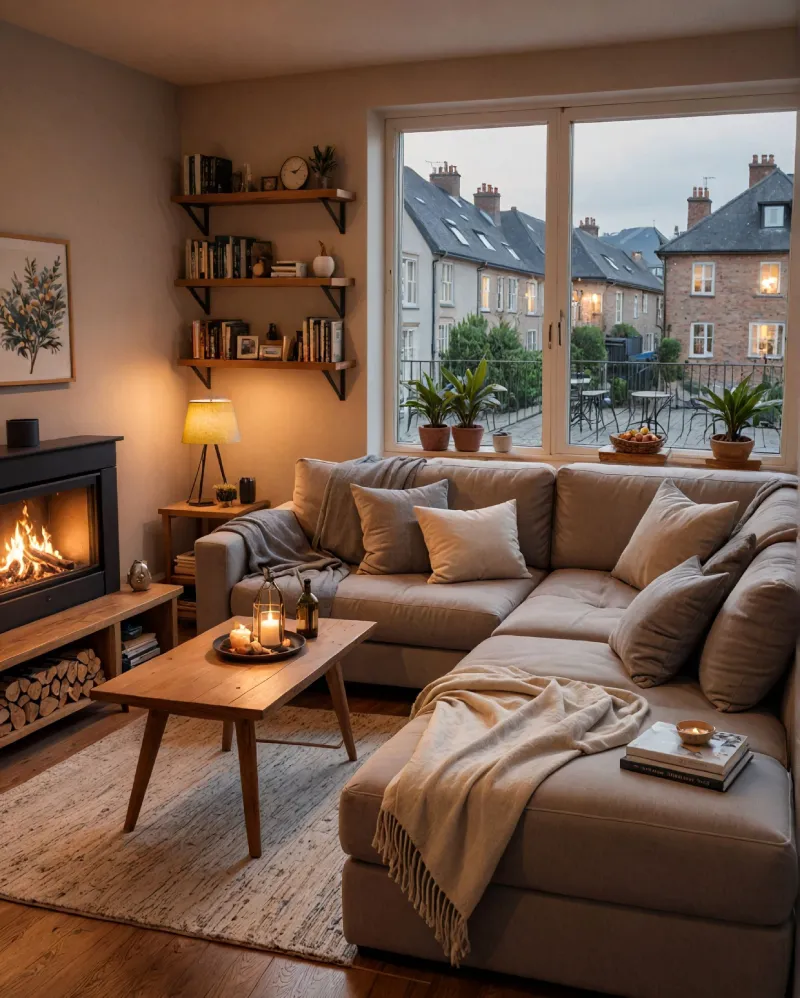
Photo: cozy basement home movie screening neighbors projector, via i.pinimg.com
Somewhere in a suburb outside Columbus, Ohio, fourteen people are crammed onto mismatched furniture in a converted garage, watching a 1973 Hungarian film with English subtitles. There's a folding table with homemade popcorn, a whiteboard someone brought from their home office, and a projector that cost less than a month of streaming subscriptions. Nobody paid a cover charge. Nobody got a ticket stub. They got a text from a neighbor that said, simply, "This Saturday. Bring a blanket."
This is what grassroots cinema looks like in 2024 — and it's happening in more American neighborhoods than you'd probably guess.
The Anti-Multiplex, In Your Zip Code
Call it what you want: a film club, a basement cinema, a movie salon. Whatever the name, the format is roughly the same. Someone with a passion for film — and usually a decent projector — opens their home to a small, curated group of neighbors, friends, and friends-of-friends for a screening that feels nothing like going to the movies commercially.
There's no pre-roll advertising. No one's checking their phone to see if the theater app has a loyalty coupon. And when the credits roll, people actually talk about what they just watched, sometimes for longer than the film itself ran.
For the people running these clubs, that conversation is the whole point.
"I've been to plenty of theaters where I walked out feeling like I'd consumed something rather than experienced it," says Marcus, who hosts a biweekly screening series out of his finished basement in Decatur, Georgia. He asked that his last name not be used — partly for privacy, partly because, as he puts it, "the underground vibe is kind of the point." His group, which he calls The Reel Neighbors, caps attendance at twenty people and rotates through a mix of international cinema, American independents, and the occasional deep-cut Hollywood film that most of his guests have genuinely never seen.
"When you watch something with twenty people you actually know, or at least sort of know, the whole energy is different. You're not performing your reaction for strangers. You're actually having it."
How These Things Get Started
Most neighborhood film clubs don't begin with a grand vision. They start with a projector someone bought for a backyard party, or a neighbor who kept saying "you have to see this film" until someone finally said "fine, show it to us then."
That's essentially the origin story for a club that's been running for nearly three years in Portland, Oregon. A woman named Diane — a former video store employee who watched the last Blockbuster in her area close in 2018 — started hosting monthly screenings in her living room as a way to share the kind of films that streaming algorithms tend to bury. Her first screening had six people. Now she maintains a waitlist.
"I pick things that have a reason to be seen together," she explains. "Not always thematically — sometimes it's a director's early work, sometimes it's two films from the same year that nobody thinks of as related but totally are. I want people to leave thinking differently about something."
Diane curates intentionally, sends out a brief write-up before each screening, and occasionally invites local filmmakers or a film studies professor from a nearby college to lead the post-screening discussion. It's become, in her words, "the most intellectually alive thing happening in my neighborhood," which she admits is a low bar in some respects but a meaningful one regardless.
The Films Nobody's Streaming
One of the unexpected side effects of this movement is a renewed interest in films that simply don't exist on major platforms. The licensing landscape for older, foreign, or niche cinema is a patchwork nightmare — many genuinely important films are either unavailable to stream legally or buried so deep in subscription menus that they might as well not exist.
Neighborhood film clubs are filling that gap in ways that feel almost archival. Physical media — Blu-rays, DVDs, even the occasional 16mm print borrowed from a university library — has made a quiet comeback in these spaces. People are digging through estate sales and used media shops to find films worth sharing.
In Minneapolis, a group that calls itself The Frame & The Fold has made it something of a mission to screen films that have never been available to stream at all. Their collection leans heavily on international cinema from the 1960s through the 1980s, and they've built a small but dedicated lending library among members.
"There's something almost rebellious about it," says one member, a graphic designer in her early thirties. "You can't just click on these films. You have to actually seek them out. That friction is part of what makes watching them feel significant."
Community Without the Algorithm
For a lot of participants, the appeal goes beyond the films themselves. These clubs are, at their core, a way to build neighborhood relationships that modern American life doesn't always make easy.
Suburban sprawl, remote work, and the general retreat into private digital spaces have made it genuinely hard to know your neighbors in any meaningful way. Film clubs offer a low-stakes, structured reason to be in the same room as people who live on your street or in your building — and then to talk, openly, about something you all just experienced together.
That's a model that lines up closely with what organizations like NEPV have long understood: culture isn't just consumed, it's shared, and the sharing is where community actually gets built.
"I know my neighbors now," says Marcus in Decatur. "I mean, I really know them. We've argued about films, we've laughed at the same moments, we've sat in silence after something heavy. That's not nothing. That's actually a lot."
Starting Your Own: It's Simpler Than You Think
For anyone curious about launching something similar, the barrier to entry is genuinely low. A decent projector can be found for under $200. A white sheet or a blank wall works fine as a screen. A group text or a neighborhood app like Nextdoor can surface interested people faster than you'd expect.
The more important decisions are curatorial: What do you want the space to feel like? How big is too big before it stops feeling intimate? Do you want themed series, open submissions from members, or a single curator making the calls?
Most clubs that stick around settle into a rhythm that reflects the personality of whoever's hosting. Some are serious and discussion-focused. Others are looser, more social, with the film as a backdrop to an evening of connection. Neither approach is wrong.
What they share is a refusal to treat cinema as background noise — and a belief that watching something together, in a real room with real people, still means something.
In a cultural moment where so much of what we consume is personalized, algorithmic, and solitary, that might be the most radical thing about these little clubs. They're insisting that movies are better when they belong to everyone in the room.
And so far, the neighbors keep showing up.